
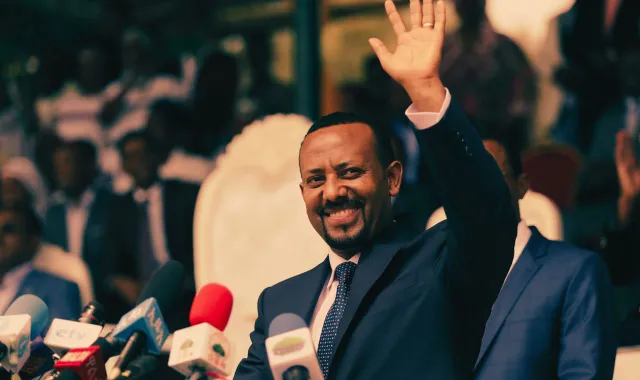
The political landscape of Ethiopia in 2026 remains one of the most complex and watched narratives in the Horn of Africa. At the center of this transformation is Prime Minister Dr. Abiy Ahmed, a leader whose tenure has been marked by dramatic shifts, ranging from global acclaim as a Nobel Peace Prize laureate to the grueling challenges of internal conflict and economic restructuring. To understand the latest Ethiopia political updates, one must look closely at how dr. abiy ahmed news is navigating the delicate balance between maintaining national sovereignty and implementing the liberalizing reforms he promised upon taking office in 2018.
Homegrown Economic Reform Agenda 2.0
As of early 2026, the administration is deeply focused on the “Homegrown Economic Reform Agenda 2.0.” This initiative is not merely a financial strategy but a political one, aimed at stabilizing a nation that has faced significant currency fluctuations and debt pressure. Dr. Abiy’s leadership insights often highlight the “Medemer” philosophy—a concept of synergy and togetherness—which he argues is the only way to bridge the ethnic and regional divides that have historically threatened the Ethiopian state. The latest news suggests a pivot toward infrastructure diplomacy, with the Grand Ethiopian Renaissance Dam (GERD) nearing full operational capacity, serving as both a source of national pride and a point of intense regional negotiation.
Politically, the Prosperity Party continues to consolidate its influence, yet it faces persistent pressure from regional autonomy movements. Dr. Abiy Ahmed’s approach in 2026 has been characterized by a “law and order” doctrine, seeking to centralize military command while simultaneously offering olive branches through the National Dialogue Commission. This commission is tasked with addressing deep-seated historical grievances, a feat that many analysts believe will determine the legacy of Dr. Abiy’s leadership. The updates from Addis Ababa indicate that while the capital enjoys a construction boom and modernization, the rural peripheries remain sensitive to shifts in federal policy.
The international community’s view of Ethiopia has also entered a new phase. After years of strained relations following the Tigray conflict, 2026 marks a period of “re-engagement.” Dr. Abiy has successfully negotiated new credit facilities and development programs, signaling a return to the global financial fold. However, leadership insights reveal a more cautious Prime Minister, one who is increasingly looking toward BRICS+ partnerships (which Ethiopia officially joined recently) to diversify the country’s strategic alliances. This shift reflects a broader trend in Ethiopian politics: a desire for strategic autonomy and a refusal to be dictated to by traditional Western powers.To provide a clearer picture of the current state of national development under Dr. Abiy Ahmed’s administration, the following table outlines the key pillars of the 2026 Reform Strategy:
Ethiopia National Reform Pillars (2026 Overview)
| Reform Pillar | Primary Objective | Current Status (2026) |
| Economic Liberalization | Privatization of state enterprises (Telecom/Banking) | Banking sector opened to foreign competition |
| Energy Sovereignty | Completion and full power generation of the GERD | 95%+ Completion; operational testing underway |
| National Dialogue | Resolution of ethnic and regional conflicts | Active sessions held in 11 regional states |
| Infrastructure | “Dine for Ethiopia” & Urban Corridor Development | Massive renovation of Addis Ababa completed |
| Agricultural Reform | Achieving wheat self-sufficiency and export | Surplus achieved; focus shifted to oilseed production |
The Digital Transformation and “Digital Ethiopia 2025” Legacy
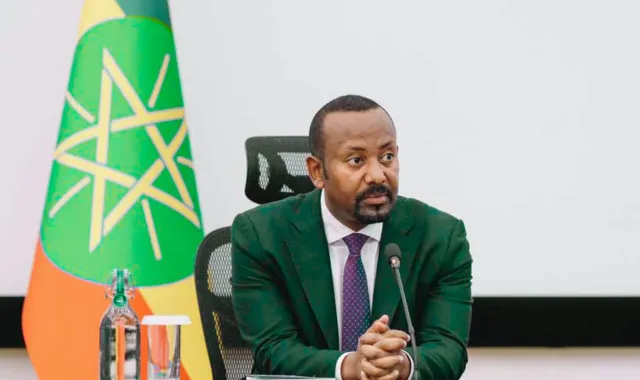
A major component of Dr. Abiy Ahmed’s leadership insight in 2026 is the total digitization of the Ethiopian economy. Following the successful launch of the “Digital Ethiopia 2025” strategy, the current year focuses on the integration of AI and blockchain into government services. Dr. Abiy has championed the “Telebirr” ecosystem, which has evolved from a simple mobile money platform into a comprehensive financial engine that drives rural commerce. By digitizing land registries and tax systems, the administration is actively fighting corruption—a move that has increased public trust in federal institutions.
The Green Legacy Initiative: Climate Leadership in Africa
Environmental policy has become a cornerstone of Dr. Abiy Ahmed’s political identity. In 2026, the “Green Legacy Initiative” has surpassed its goal of planting 50 billion seedlings. This is not just an ecological project; it is a diplomatic tool. Dr. Abiy has used Ethiopia’s reforestation success to position the country as a leader in the global climate conversation. By linking environmental stewardship with food security, the Prime Minister has created a narrative of resilience that resonates with both local farmers and international climate donors.
Regional Autonomy vs. Centralized Governance
One of the most intense political updates in 2026 is the ongoing debate regarding the “Prosperity Party’s” centralist tendencies versus the constitutional right to regional autonomy. Dr. Abiy’s leadership is defined by his attempt to create a “Pan-Ethiopian” identity. While this has unified many, it remains a point of contention in regions like Oromia and Amhara. The 2026 political climate is characterized by a “Competitive Federalism,” where regions compete for federal investment while the central government maintains a tight grip on security and macro-monetary policy.
The “Dine for Generation” Projects and Tourism Growth
Building on the success of earlier tourism projects, Dr. Abiy has launched the “Dine for Generation” initiative in 2026. These latest updates highlight the inauguration of massive eco-tourism sites in pristine areas of the country. Leadership insights suggest that Dr. Abiy views tourism as the “third pillar” of the economy alongside agriculture and industry. These projects are designed to showcase Ethiopia’s history and natural beauty, moving the global perception of the country away from historical images of famine and toward a future of luxury and cultural richness.
Judicial Reforms and the Rule of Law
To ensure the longevity of his reforms, Dr. Abiy Ahmed has initiated a sweeping overhaul of the Ethiopian judicial system in 2026. The latest news focuses on the appointment of independent judges and the modernization of courtrooms with digital filing systems. By strengthening the “Third Branch” of government, Abiy seeks to reassure foreign investors that their contracts will be protected by law, not just political whim. This move is seen as a direct response to international calls for improved governance and human rights protections.
Education and STEM: Preparing for the 2030 Workforce
Dr. Abiy Ahmed’s leadership insights frequently return to the importance of the “knowledge economy.” In 2026, the government has completed the construction of several “Science and Technology Universities” modeled after global elite institutions. The curriculum has been shifted to emphasize coding, engineering, and biotechnology. By investing in the youth—who make up the majority of the population—Abiy is attempting to turn Ethiopia’s “demographic dividend” into an economic engine that can compete with the likes of India and Vietnam in the global manufacturing sector.
Geopolitical Shifts: Ethiopia’s Role in the Red Sea and Gulf
As of 2026, Ethiopia’s foreign policy has become increasingly focused on the Red Sea corridor. Dr. Abiy Ahmed has been instrumental in navigating the complex web of interests involving the UAE, Saudi Arabia, and Turkey. The latest updates show Ethiopia securing long-term lease agreements for port access in neighboring countries, effectively ending its status as a “land-locked” nation in practical terms. This “Blue Economy” strategy is perhaps the most significant geopolitical move of Dr. Abiy’s career, ensuring that Ethiopia remains the dominant economic force in East Africa.
The Evolution of Medemer: From Philosophy to Policy
The leadership of Dr. Abiy Ahmed cannot be discussed without an analysis of “Medemer.” When he first introduced the term, it was viewed by many as a vague academic concept. However, in 2026, Medemer has been codified into the very fabric of Ethiopian governance. It represents a middle ground between the radical ethno-nationalism of the past and the hyper-individualism of Western liberalism. Latest updates show that the government is using this philosophy to justify the merging of various regional parties into a single national entity, the Prosperity Party.
Critics of this approach argue that it risks suppressing the unique identities of Ethiopia’s diverse nations and nationalities. Conversely, supporters believe that Dr. Abiy’s insights into “building a common house” are the only way to prevent the country from fracturing. In recent speeches, the Prime Minister has emphasized that Ethiopia’s survival depends on its ability to compete in a globalized world, which requires a unified domestic front.
Strategic Infrastructure and the “Corridor” Vision
One of the most visible updates in Ethiopia is the transformation of its urban centers. Dr. Abiy Ahmed has personally spearheaded the “Corridor Development Project” in Addis Ababa. This project, while controversial due to the displacement of some residents, has modernized the city’s infrastructure, creating pedestrian-friendly walkways, parks, and high-tech transit systems. The Prime Minister’s insight here is clear: for Ethiopia to become a hub for tourism and international business, its capital must reflect a world-class image.
Beyond the capital, the news focuses on the logistics sector. The expansion of the Ethio-Djibouti railway and the development of new industrial parks are part of a broader strategy to make Ethiopia a manufacturing powerhouse in East Africa. Dr. Abiy has frequently noted that “geopolitics is about connectivity,” and his efforts to secure port access through various agreements with neighboring countries underline this vision.
Navigating Regional Geopolitics and Security
The Horn of Africa is a volatile region, and Dr. Abiy Ahmed’s leadership is frequently tested by external pressures. In 2026, the focus has shifted toward stabilizing relations with Sudan and Somalia while maintaining a firm stance on the GERD negotiations with Egypt. Latest news indicates that Ethiopia is positioning itself as a regional mediator, utilizing its seat in the African Union to advocate for “African solutions to African problems.”
Internally, security remains a top priority. The government has faced insurgencies in various regions, and Dr. Abiy’s leadership insights suggest a move toward a more sophisticated, intelligence-led approach to counter-insurgency rather than blunt military force. The 2026 updates show a significant investment in drone technology and cybersecurity, reflecting a modernization of the Ethiopian National Defense Force (ENDF).
Economic Resilience and Foreign Investment
Despite global inflation and the lingering effects of past conflicts, Ethiopia’s economy in 2026 shows signs of remarkable resilience. Dr. Abiy Ahmed’s administration has successfully managed to devalue the Birr in a controlled manner, a move that was highly praised by the IMF and World Bank. This reform has unlocked billions in foreign direct investment, particularly in the telecommunications and financial sectors. For the first time in decades, foreign banks are setting up shop in Addis Ababa.
The “Dine for Ethiopia” projects—which include luxury eco-resorts in Koysha, Wonchi, and Gorgora—are also making headlines. These projects are designed to boost the tourism sector, diversifying revenue streams away from traditional exports like coffee. The Prime Minister’s insight is that Ethiopia’s natural beauty is an untapped goldmine that can provide jobs for millions of young Ethiopians.
Leadership Insights: The Personal Style of Dr. Abiy Ahmed
What sets Dr. Abiy apart from his predecessors is his hands-on approach and his mastery of social media and modern communication. He is often seen visiting project sites at midnight or driving himself to meetings, projecting an image of a tireless worker. In 2026, this “servant-leader” persona remains central to his political brand. He utilizes leadership insights to communicate directly with the public, often bypassing traditional media to explain his reforms.
However, this style also draws criticism from those who prefer institutionalized decision-making over charismatic leadership. The debate in 2026 revolves around whether the reforms are too dependent on Dr. Abiy as an individual. Strengthening institutions like the judiciary and the election board is a key demand from the opposition, and the latest updates suggest that the Prime Minister is beginning to address these concerns.
Human Rights and the Path to Reconciliation
The narrative of Dr. Abiy Ahmed’s leadership is incomplete without discussing human rights. While the early years of his premiership were marked by a massive opening of political space, subsequent years saw a tightening of control during times of conflict. In 2026, the news is focused on the “Transitional Justice Policy.” This framework aims to provide a legal path for accountability for past abuses while ensuring that the country does not spiral back into violence.
Dr. Abiy has stated that “justice must be tempered with mercy” to ensure a lasting peace. The leadership insight here is that a purely punitive approach would likely alienate various ethnic groups and restart the cycle of conflict. The National Dialogue Commission is the primary vehicle for this reconciliation, and its progress is being closely monitored by both domestic actors and the international community.
Future Outlook: Ethiopia Beyond 2026

Looking ahead, the trajectory of Ethiopia under Dr. Abiy Ahmed appears to be one of cautious optimism. The major hurdles of 2024 and 2025—such as debt restructuring and immediate post-war stabilization—have largely been cleared. The focus for the remainder of 2026 is on ensuring that the benefits of economic reform reach the average citizen. Rising living costs remain a political vulnerability, and the administration’s ability to control inflation will be a decisive factor in future elections.
Dr. Abiy’s vision for a “Great Ethiopia” is a powerful motivator for many, but it requires the continuous management of the country’s diverse interests. The latest updates suggest a leader who has matured through crisis, moving from the idealistic reformer of 2018 to a more pragmatic and strategic statesman in 2026. The world continues to watch as Ethiopia, under his guidance, attempts to redefine its role on the global stage.
FAQs
Q: What are the most recent economic reforms introduced by Dr. Abiy Ahmed in 2026?
In 2026, the primary economic reforms include the full liberalization of the banking sector to foreign investors, the implementation of a market-based exchange rate for the Ethiopian Birr, and the finalization of the privatization process for major state-owned enterprises, including Ethio Telecom.
Q: How is the Grand Ethiopian Renaissance Dam (GERD) affecting regional politics today?
The GERD has reached near-full capacity in 2026. While it has caused tension with downstream countries like Egypt, Dr. Abiy has focused on “energy diplomacy,” offering to sell surplus electricity to neighboring nations to foster regional integration and reduce the risk of conflict.
Q: What is the current status of the National Dialogue in Ethiopia?
The National Dialogue is currently in its implementation phase, with sessions being held across all 11 regional states. It is intended to address historical grievances and build a consensus on the future structure of the Ethiopian federation.
Q: How has Dr. Abiy Ahmed’s leadership style changed since he won the Nobel Peace Prize?
Since 2019, Dr. Abiy’s style has evolved from high-level idealism to a more pragmatic, security-conscious approach. He remains focused on large-scale infrastructure and modernization but now places a much heavier emphasis on national sovereignty and internal stability.
Q: What is the “Medemer” philosophy in the context of 2026 politics?
Medemer is used as the ideological foundation for the Prosperity Party. It promotes the idea of “synergy,” arguing that regional and ethnic interests should be harmonized into a single national goal to ensure Ethiopia’s survival in a competitive global environment.
Q: Is Ethiopia still facing internal security challenges under Dr. Abiy?
While large-scale conflict has subsided, 2026 updates indicate that localized insurgencies and ethnic tensions persist in parts of the Amhara and Oromia regions. The government is addressing these through a combination of military modernization and political negotiation.
Q: What role does Ethiopia play in the BRICS+ alliance as of 2026?
Ethiopia is an active member of BRICS+, using the alliance to secure new investment partners and reduce its reliance on Western-led financial institutions. This move is a key part of Dr. Abiy’s strategy for “Strategic Autonomy” on the world stage.
Conclusion
The journey of Ethiopia under Dr. Abiy Ahmed is a testament to the complexities of modern nation-building. From the bustling corridors of a revitalized Addis Ababa to the quiet negotiations of the National Dialogue Commission, the country is undergoing a profound metamorphosis. The latest political updates suggest that while the road has been fraught with challenges, the administration’s focus on economic liberalization, infrastructure development, and the “Medemer” philosophy is creating a new blueprint for the nation’s future.
Dr. Abiy Ahmed remains a polarizing yet undeniably transformative figure. His leadership insights have pushed Ethiopia toward a more market-oriented and technologically advanced society, even as the country grapples with the ghosts of its past. As we move through 2026, the success of his reforms will depend on the government’s ability to translate macroeconomic gains into tangible improvements for the daily lives of its citizens. Whether this era will be remembered as the definitive “Ethiopian Renaissance” depends on the delicate balance of peace, justice, and economic growth that Dr. Abiy must maintain in the years to come. In the end, the story of Dr. Abiy Ahmed is the story of Ethiopia itself—resilient, diverse, and striving for a place of prominence in the 21st century.